In brief
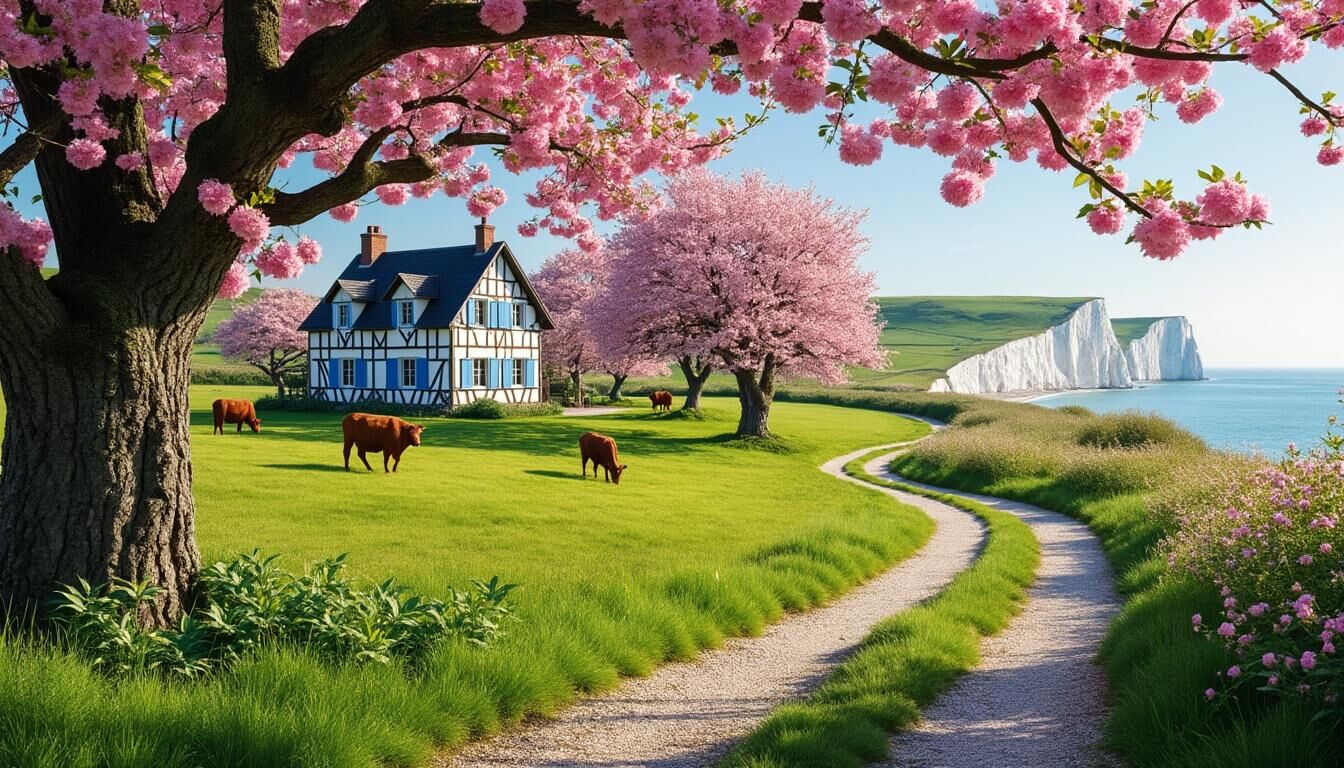
Normandy : quality of life between sea and bocage, local services and cultural richness.
A varied coastline and beaches for family weekends or contemplative getaways.
Network of museums and memorial sites to understand the Second World War.
Dynamic cities: Caen, Rouen, Honfleur and authentic villages.
Friendly gastronomy: cheeses, cider, seafood and local liqueurs.
At the crossroads of sea and land, Normandy invites discovery that blends light, history and a gentle lifestyle. Between white cliffs, peaceful estuaries and bocage, the region offers a range of experiences for families, art lovers and those looking to settle. Local services, the presence of hospitals and schools make daily life reassuring, while cultural spaces and coastal walks shape a balanced everyday life.
This guide focuses on the concrete assets of Normandy: accessibility of healthcare, the wealth of museums, memorial sites of the Second World War, emblematic landscapes and gastronomy. It provides practical markers, resident testimonies and suggestions for organizing your stay or relocation, relying on local resources and specialized guides to deepen your project.
An exceptional living environment in Normandy: quality and local services
Accessibility of essential services in Normandy: health, education and well-being
The region relies on well-distributed hospitals and clinics. In Caen, the medical offer covers specialties and emergencies, which reassures families and working people.
In the Orne as in coastal areas, health centers and practices spread around make access to local care easier. Regional transport networks and motorway links reduce travel times to larger facilities.
For education, middle schools, high schools and university institutions around Caen and Rouen ensure solid coverage. This quality of life partly explains why many households choose Normandy to settle.
Insight: balanced access to services remains a decisive argument for living in the region.
Testimonials from Normandy residents about daily quality of life
Sophie, a primary school teacher in Bayeux, highlights the tranquility and the proximity of cultural facilities. She appreciates being able to combine professional life with walks by the sea, which nourish her daily life.
Thomas, a restaurateur in Honfleur, emphasizes the warmth of artisan networks and the balanced tourist attendance that supports the local economy.
A couple settled near Rouen report good access to hospitals and rich extracurricular activities for their children.
Insight: residents’ feedback confirms that Normandy combines well-being and practicality.
Discover leisure and cultural activities in Normandy for the whole family
The unmissable cultural events and local festivals in Normandy
Normandy lives to the rhythm of a dense cultural calendar: music festivals, book fairs, contemporary art events and sea festivals. Honfleur regularly attracts artists and music lovers with its summer events.
To plan a stay or discover annual events, the Lonely Planet guide provides routes and practical suggestions. You can complement your preparation by consulting the edition available at Fnac or by browsing a detailed online guide via Eyrolles.
Local stages and small venues offer programs that showcase regional and international talents. The network of cultural venues promotes contemporary creation while highlighting the artistic roots of the region.
Insight: Normandy’s cultural life unfolds all year round, ideal for curious families.
Associations and sports in Normandy: activities for all ages
Local associations structure a dense sports offer: sailing, hiking, horseback riding, team sports and outdoor practices. Municipal clubs and associative structures facilitate the integration of newcomers.
Municipal and intercommunal facilities promote regular practice and encounters between generations.
Insight: joining an association is often the key to quick integration.
Outdoor leisure adapted to families in Normandy
Seaside walks, coastal paths and managed forests offer outings year-round. Family beaches are suitable for games, strolls and supervised swimming in season.
The proximity of natural areas makes the region suitable for Sunday outings and short nature breaks.
Insight: the richness of the landscapes allows you to vary outings without long journeys.
Major historical sites of Normandy: memory and world heritage
Landing beaches and memorial sites of the Second World War
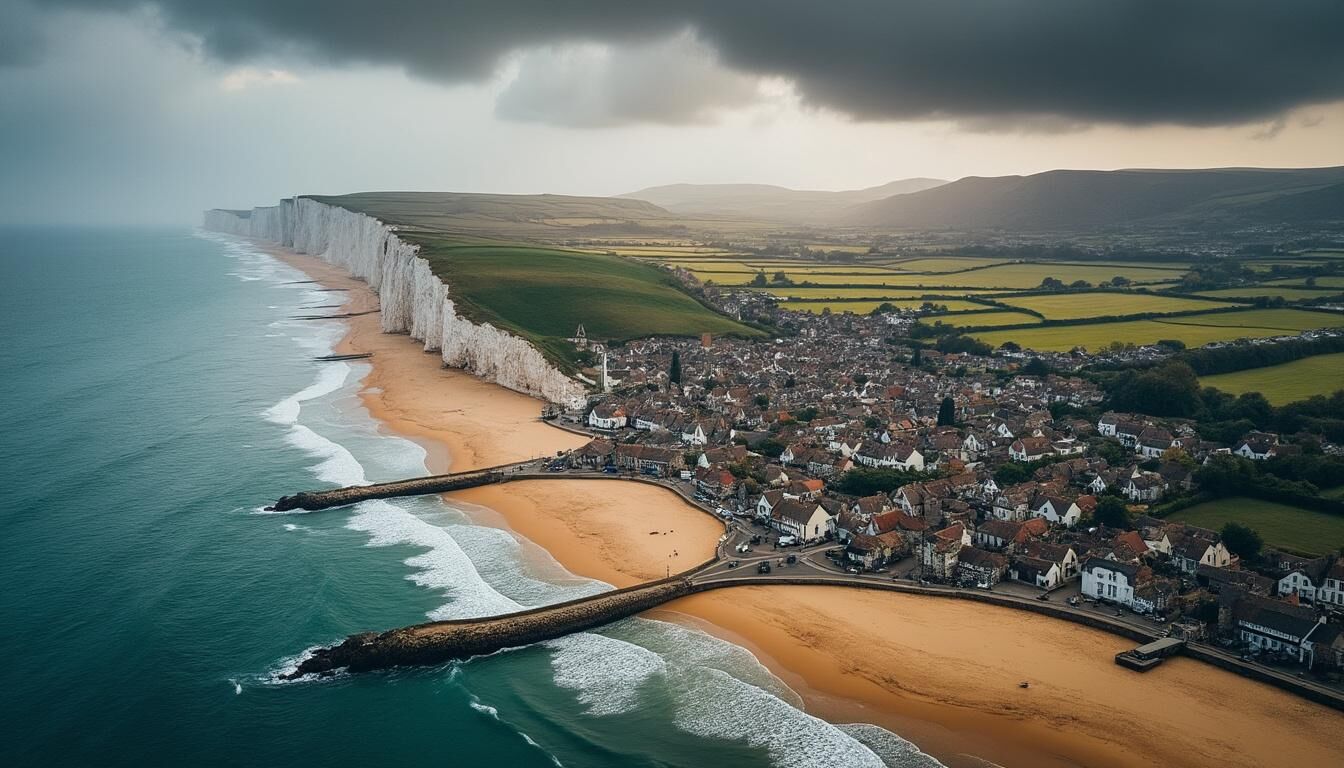
The Second World War left traces that the region preserves with solemnity. The sites of 6 June 1944 are essential reference points for understanding European history.
Among the must-see sites: Utah Beach, Omaha Beach, Juno Beach, Sword Beach, Arromanches and the battery of Longues-sur-Mer. These places offer panoramas and unique interpretation points.
Nearby, the museum at Utah Beach houses collections of objects and vehicles, the museum at Arromanches explains the artificial port, the museum in Bayeux presents local archives and the museum of the Mémorial de Caen explains the global stakes of the conflict.
Bayeux also preserves civilian traces of the post-war period and military cemeteries that recall the price of freedom.
Insight: visiting these sites is to read an essential page of 20th-century history at human scale.
Norman museums dedicated to military history and memory
In addition to the places mentioned, the region offers thematic routes in maritime and military museums. The staging of collections facilitates understanding for young audiences and enthusiasts.
Guided visits, often led by volunteers or local historians, add anecdotes and personal stories to make history come alive.
Insight: Normandy’s museum structures combine pedagogy and emotion to transmit memory.
Guided tours of emblematic historical sites in Normandy
Local guides offer themed circuits: right-bank/left-bank of the landing, commemorative itineraries and excursions to the cemeteries. These routes are often combined with a boat crossing to observe the places from the sea.
Practical tip: book guided tours and museum tickets in advance during high season and allow a full day for the densest sites.
Insight: a guided tour transforms discovery into a more complete memorial experience.
The Viking and medieval heritage in Normandy: William the Conqueror and Ornavik
The Bayeux tapestry: a major symbol of Norman heritage
The famous Bayeux tapestry tells the conquest of England by William. It is a valuable visual document for European medieval history.
The route around the tapestry allows one to address urban life in the Middle Ages and the transformation of sites over the centuries.
Insight: the tapestry is an ideal entry point for those who wish to understand the medieval roots of the region.
Castles and abbeys bearing witness to Norman history
Fortresses, manor houses and abbeys punctuate the region: some abbeys preserve cloisters, others have been preserved as cultural venues. Gothic cathedrals, notably the cathedral of Rouen, testify to a powerful religious and artistic tradition.
Royal and seigneurial castles tell the story of medieval geopolitics and Normandy’s imprint on Europe.
Insight: each building is a page of history you can read while walking.
Emblematic natural landscapes of Normandy: diversity and preserved beauty
The cliffs of Étretat and the Alabaster Coast, jewels of Norman nature
The cliffs of Étretat rise like limestone lace above the sea. The panoramas are conducive to hiking, photography and contemplation.
The Alabaster Coast offers spectacular viewpoints and fishing villages that preserve ancient maritime traditions.
Insight: these cliffs embody the mineral strength and the region’s particular light.
Discovering the Suisse Normande and the Cotentin peninsula
The Suisse Normande offers steep valleys and canoe routes, ideal for outdoor enthusiasts. The Cotentin peninsula provides a maritime contrast, with capes, ports and wild landscapes.
The Cotentin is distinguished by its isolated villages, lighthouses and sea-related traditions.
Insight: Normandy’s topographic diversity allows alternating hikes, water sports and rural discoveries.
Mont-Saint-Michel: an exceptional natural and cultural site
The Mont-Saint-Michel, listed as a World Heritage site, combines a rocky islet, an abbey and ecological issues linked to the tides. Its silhouette remains an international symbol of the region.
Insight: visiting Mont-Saint-Michel is confronting a spectacular sea-land duality.
Must-see tourist destinations in Normandy: charm and authenticity
Cherbourg and the Cité de la Mer: maritime immersion in Normandy
Cherbourg is a major port in the northwest, with the Cité de la Mer offering immersion in the oceanic world and exhibitions on long-distance navigation.
Recent developments make access to exhibitions and basins easier, with spaces adapted for families.
Insight: reading the coastline from the maritime city connects naval history to the present.
Granville, Deauville and Honfleur: cultural and seaside richness
Granville and its Christian Dior museum, Deauville with its elegant promenade, and Honfleur with its old basin make up an attractive trio combining beach, culture and local trade.
These destinations offer stays combining seaside comfort and heritage discoveries.
Insight: alternating city/beach is an asset for short getaways.
Picturesque villages and traditional ports: the authentic face of the region
The coast hides small ports like Barfleur or more discreet havens, while Saint-Vaast-la-Hougue embodies Norman authenticity with its pies, narrow streets and maritime traditions.
Insight: moving away from major tourist routes reveals a more secret and precious Normandy.
Norman gastronomy: culinary specialties and local flavors
Norman cheeses, cider and seafood: flagship products to savor
The Norman table is generous: camembert, livarot, pont-l’évêque and farmhouse cheeses testify to an ancient dairy know-how. Cider naturally accompanies these dishes, while ports offer oysters, mussels and fresh fish.
Tip: favor local markets to meet producers and taste seasonal products.
Insight: gastronomy is a vehicle of welcome and transmission in Normandy.
Bénédictine liqueur and other Norman delights to discover
The Bénédictine liqueur, born in Fécamp, is among the region’s liquid treasures. Aged cheeses, cups of teurgoule and seafood dishes complete a rich and convivial taste palette.
Insight: culinary discovery is an excellent excuse to travel the region.
Architecture and originality in Normandy: historic monuments and unique experiences
Historic monuments and contemporary Norman buildings not to be missed
Architectural diversity ranges from half-timbered houses to Gothic cathedrals, through post-war reconstructions and contemporary achievements in Le Havre. The cathedral of Rouen and the abbey of Mont-Saint-Michel are among the must-sees.
Many lighthouses and bridges line the coast and estuaries, marking the visual identity of the territory.
Insight: architecture tells the social and economic evolution of the region.
Unusual activities in Normandy: amphibious crossing, plant sculptures and themed museums
Among original experiences: the amphibious crossing to the island of Tatihou, routes of plant sculptures in landscaped parks, and themed museums dedicated to local know-how.
These initiatives offer unexpected angles to explore Normandy differently.
Insight: the unusual complements major sites for a more personal discovery.
Practical tips for discovering the region
Rent a car to fully enjoy distances and coastal routes.
Book guided tours and museum tickets in high season to avoid queues.
Favor local markets for fresh and authentic products.
Site | Location | Why visit |
|---|---|---|
Utah Beach | Manche | Museum and historically preserved beach |
Omaha Beach | Calvados | Memory and imposing cemeteries |
Arromanches | Calvados | Remains of the artificial port and panorama |
Specialty | Where to taste it |
|---|---|
Farmhouse Camembert | Cheesemakers around Bayeux and the Orne |
Artisanal cider | Orchards and cellars of the Pays d’Auge |
Seafood | Fishing ports and markets (Granville, coastal stalls) |
To prepare a road trip or deepen a visit, paper and digital guides remain valuable allies. Consult specialized editions and regional information portals, and for a practical read, consider the guide available on librairie-voyage or the electronic edition listed on Normandie Lovers. Another useful resource is an online synthesis on Tourisme Monde.
Other remarkable sites beyond the big classics
The region hides authentic villages, rivers suitable for kayaking and marked hiking routes. Countryside itineraries, orchards and cider routes offer bucolic escapes.
Insight: exploring at random often reveals the most beautiful discoveries.
Internal linking and resources
To complement this reading, consider practical guides and specialized editions, for example the edition available on Amazon or detailed presentations on Lisez. An older but useful version is available at Maison de la Presse.
<!– Infographie interactive : "Explorer la Normandie : guide complet" À coller directement dans une page existante (sans ni complets). Hauteur maximale réglée (max-height) pour respecter la contrainte 2000px. –>Explore Normandy — Interactive Guide
Click on a department to see facts, attractions and the current weather. All data and texts are in French.
Departments of Normandy
Best time to visit
Slide to see tips by month
July: mild climate, festivals and lively beaches.
Quick quiz
Which department contains Mont-Saint-Michel?
La Normandie est …
” } */ /* ———- Données locales (editable) ———- */ const TEXTE = { header: “Explore Normandy — Interactive Guide”, selectPrompt: “Click on a department to display detailed information: attractions, key facts and current weather.”, monthTips: { 1: “January: Quiet, wintry landscapes. Ideal for brisk hikes.”, 2: “February: Mild winter, occasional local festivals.”, 3: “March: Start of spring, apple trees in blossom.”, 4: “April: Pleasant spring, green landscapes.”, 5: “May: Mild temperatures, local festivals.”, 6: “June: Good period for the coast and festivals.”, 7: “July: Mild climate, festivals and lively beaches.”, 8: “August: Peak tourist season, attractions open.”, 9: “September: Pleasant temperatures, harvest time and calm.”, 10: “October: Autumn colors, walking in nature.”, 11: “November: Quieter season, comforting gastronomy.”, 12: “December: End-of-year atmosphere and local markets.” }, quizCorrect: “Well done! Manche is home to Mont‑Saint‑Michel.”, quizWrong: “No. Try again.” }; /* Departments data : name, code, coords (lat,long) for weather, short description, attractions */ const DEPARTMENTS = [ { id: “calvados”, name: “Calvados”, code: 14, coords: { lat: 49.1829, lon: -0.3700 }, // Caen desc: “Sandy coast, Landing beaches, cider and medieval heritage.”, facts: [ “Prefecture: Caen”, “Department code: 14”, “Known for cider and the historic D-Day beaches” ], attractions: [ “D-Day beaches (Omaha, Sword, etc.)”, “Mémorial de Caen”, “Pays d’Auge and half-timbered villages” ], wikiPage: “Calvados” }, { id: “manche”, name: “Manche”, code: 50, coords: { lat: 48.6356, lon: -1.5115 }, // Saint-Lô approx desc: “Western coast up to Mont‑Saint‑Michel, marine landscapes and bocage.”, facts: [ “Prefecture: Saint‑Lô”, “Department code: 50”, “Contains Mont‑Saint‑Michel (border between Manche and historical Brittany)” ], attractions: [ “Mont‑Saint‑Michel”, “Côte des Isles and cliffs”, “Maritime festivals” ], wikiPage: “Manche_(département)” }, { id: “orne”, name: “Orne”, code: 61, coords: { lat: 48.4317, lon: 0.0933 }, // Alençon approx desc: “Bocage landscapes, forests, stud farms and rural traditions.”, facts: [ “Prefecture: Alençon”, “Department code: 61”, “Known for its equestrian heritage and stud farms” ], attractions: [ “National stud farms”, “Écouves Forest”, “Lace museum in Alençon” ], wikiPage: “Orne” }, { id: “eure”, name: “Eure”, code: 27, coords: { lat: 49.0241, lon: 1.1508 }, // Évreux approx desc: “River valleys, manor houses, gardens and impressionist heritage.”, facts: [ “Prefecture: Évreux”, “Department code: 27”, “Valley landscapes and very close to Île‑de‑France” ], attractions: [ “Giverny (Monet’s House nearby)”, “Castles and gardens”, “Normandy Impressionist events” ], wikiPage: “Eure” }, { id: “seine-maritime”, name: “Seine‑Maritime”, code: 76, coords: { lat: 49.4432, lon: 1.0993 }, // Rouen approx desc: “Cliffs, ports, Rouen and Gothic heritage.”, facts: [ “Prefecture: Rouen”, “Department code: 76”, “Known for the cliffs of Étretat and the historic city of Rouen” ], attractions: [ “Étretat cliffs”, “Rouen Cathedral”, “Alabaster Coast” ], wikiPage: “Seine‑Maritime” } ]; /* ———- UTILITAIRES ———- */ /* Mois en français (index 1..12) */ const MOIS = { 1: “January”,2:”February”,3:”March”,4:”April”,5:”May”,6:”June”, 7:”July”,8:”August”,9:”September”,10:”October”,11:”November”,12:”December” }; /* Find department by id */ function findDeptById(id) { return DEPARTMENTS.find(d => d.id === id); } /* ———- Rendu initial ———- */ /* Crée et injecte les tuiles des départements */ const grid = document.getElementById(‘departments-grid’); DEPARTMENTS.forEach((dept, idx) => { const btn = document.createElement(‘button’); btn.className = “dept-tile p-3 rounded-lg border bg-white text-left focus:outline-none focus:ring-2 focus:ring-blue-400”; btn.setAttribute(‘role’, ‘listitem’); btn.setAttribute(‘aria-label’, dept.name); btn.dataset.dept = dept.id; btn.innerHTML = `${dept.desc}
`; // Keyboard accessibility: Enter/Space triggers click btn.addEventListener(‘keydown’, (e) => { if (e.key === ‘Enter’ || e.key === ‘ ‘) { e.preventDefault(); btn.click(); } }); btn.addEventListener(‘click’, () => selectDepartment(dept.id)); grid.appendChild(btn); }); /* Month slider UI */ const monthRange = document.getElementById(‘month-range’); const monthLabel = document.getElementById(‘month-label’); const monthTip = document.getElementById(‘month-tip’); monthRange.addEventListener(‘input’, (e) => { const m = parseInt(e.target.value, 10); monthLabel.textContent = MOIS[m]; monthTip.textContent = TEXTE.monthTips[m]; }); /* Quiz buttons */ document.querySelectorAll(‘.quiz-btn’).forEach(btn => { btn.addEventListener(‘click’, () => { const answer = btn.dataset.answer; const res = document.getElementById(‘quiz-result’); if (answer === ‘Manche’) { res.textContent = TEXTE.quizCorrect; res.className = ‘text-green-700’; } else { res.textContent = TEXTE.quizWrong; res.className = ‘text-red-700’; } }); }); /* ———- Interactions : sélection d’un département ———- */ const detailsName = document.getElementById(‘dept-name’); const detailsDesc = document.getElementById(‘dept-desc’); const factsCard = document.getElementById(‘facts’); const factsList = document.getElementById(‘facts-list’); const attractionsCard = document.getElementById(‘attractions’); const attractionsList = document.getElementById(‘attractions-list’); const weatherCard = document.getElementById(‘weather-card’); const weatherContent = document.getElementById(‘weather-content’); const wikiCard = document.getElementById(‘wiki-card’); const wikiContent = document.getElementById(‘wiki-content’); /* Clear and hide detail sections */ function hideDetails() { factsCard.classList.add(‘hidden’); factsCard.setAttribute(‘aria-hidden’,’true’); attractionsCard.classList.add(‘hidden’); attractionsCard.setAttribute(‘aria-hidden’,’true’); weatherCard.classList.add(‘hidden’); weatherCard.setAttribute(‘aria-hidden’,’true’); wikiCard.classList.add(‘hidden’); wikiCard.setAttribute(‘aria-hidden’,’true’); } /* Main selection handler */ async function selectDepartment(id) { const dept = findDeptById(id); if (!dept) return; // Update header / description detailsName.textContent = `${dept.name} (code ${dept.code})`; detailsDesc.textContent = dept.desc; // Facts factsList.innerHTML = ”; dept.facts.forEach(f => { const li = document.createElement(‘li’); li.textContent = f; factsList.appendChild(li); }); factsCard.classList.remove(‘hidden’); factsCard.setAttribute(‘aria-hidden’,’false’); // Attractions attractionsList.innerHTML = ”; dept.attractions.forEach(a => { const li = document.createElement(‘li’); li.textContent = a; attractionsList.appendChild(li); }); attractionsCard.classList.remove(‘hidden’); attractionsCard.setAttribute(‘aria-hidden’,’false’); // Weather (fetch) weatherCard.classList.remove(‘hidden’); weatherCard.setAttribute(‘aria-hidden’,’false’); weatherContent.innerHTML = ‘Loading weather…
‘; fetchWeatherFor(dept); // Wikipedia summary (fetch) wikiCard.classList.remove(‘hidden’); wikiCard.setAttribute(‘aria-hidden’,’false’); wikiContent.textContent = ‘Loading the Wikipedia summary…’; fetchWikiSummary(dept.wikiPage); } /* ———- API : Open-Meteo (météo gratuite sans clé) ———- Documentation : https://open-meteo.com/ Exemple d’URL pour requête météo actuelle (remplacer latitude/longitude) : https://api.open-meteo.com/v1/forecast?latitude=49.1829&longitude=-0.3700¤t_weather=true&timezone=Europe%2FParis Exemple de réponse abrégée (voir plus haut dans le header du script) —————————————————————————– */ async function fetchWeatherFor(dept) { const { lat, lon } = dept.coords; // Construire l’URL : on demande current_weather et daily résumé (max 3 jours) const url = `https://api.open-meteo.com/v1/forecast?latitude=${encodeURIComponent(lat)}&longitude=${encodeURIComponent(lon)}¤t_weather=true&daily=temperature_2m_max,temperature_2m_min,weathercode&timezone=Europe%2FParis`; try { const res = await fetch(url); if (!res.ok) throw new Error(‘Erreur réseau météo’); const data = await res.json(); // current_weather contient temperature, windspeed, weathercode, time const cw = data.current_weather; const daily = data.daily || null; // Convertir code météo en description sommaire (quelques cas communs) const weatherDesc = mapWeatherCodeToFrench(cw ? cw.weathercode : null); // Afficher weatherContent.innerHTML = `${data.extract ? data.extract : “Résumé non disponible.”}
Practical FAQ
{“@context”:”https://schema.org”,”@type”:”FAQPage”,”mainEntity”:[{“@type”:”Question”,”name”:”How to get around Normandy to visit several sites in a few days?”,”acceptedAnswer”:{“@type”:”Answer”,”text”:”Renting a car remains the most flexible way to cover the coastline and the inland areas. Trains and buses complement some journeys but a car allows you to reach small villages and remote beaches.”}},{“@type”:”Question”,”name”:”Which museums are must-sees to understand the Second World War?”,”acceptedAnswer”:{“@type”:”Answer”,”text”:”Among the essentials: the Utah Beach museum, the Arromanches museum and the Mémorial de Caen. These places offer educational routes and exhibitions of period objects.”}},{“@type”:”Question”,”name”:”Where to taste Norman specialties?”,”acceptedAnswer”:{“@type”:”Answer”,”text”:”Local markets, farmhouse cheesemakers and seaside restaurants are the best places to taste camembert, cider and seafood. Tourist offices indicate partner producers.”}}]}How to get around Normandy to visit several sites in a few days?
Renting a car remains the most flexible way to cover the coastline and the inland areas. Trains and buses complement some journeys but a car allows you to reach small villages and remote beaches.
Which museums are must-sees to understand the Second World War?
Among the essentials: the Utah Beach museum, the Arromanches museum and the Mémorial de Caen. These places offer educational routes and exhibitions of period objects.
Where to taste Norman specialties?
Local markets, farmhouse cheesemakers and seaside restaurants are the best places to taste camembert, cider and seafood. Tourist offices indicate partner producers.
To go further
You will also like:
Editorial information
Meta Title : Explore Normandy : complete guide
Meta Description : Complete guide to discover Normandy: historical sites, nature, gastronomy and quality of life. Practical tips and resources.
Main keyword : Normandy
Secondary keywords : beaches, museum, history, tourism
Length : in-depth guide
Category : Visit / Live
Writer: Mathilde Dubois — Regional expert